Network and alumni
A network measuredin decades.
Graduation is an entry rather than a conclusion. What follows is the part of the work that takes the longest and matters most: chapters, mentorship, collaboration, and the return of alumni as the people who carry the next cohort.
Reach
Across borders,without dissolving them.
Fellows come from as many countries as each cohort allows, and from professions that rarely meet. The intention is a network dense enough that a fellow moving between countries already knows someone in the next one.
European cooperation of this kind is meant to strengthen national responsibility, not to replace it. A fellow returns home better equipped for the place they came from.
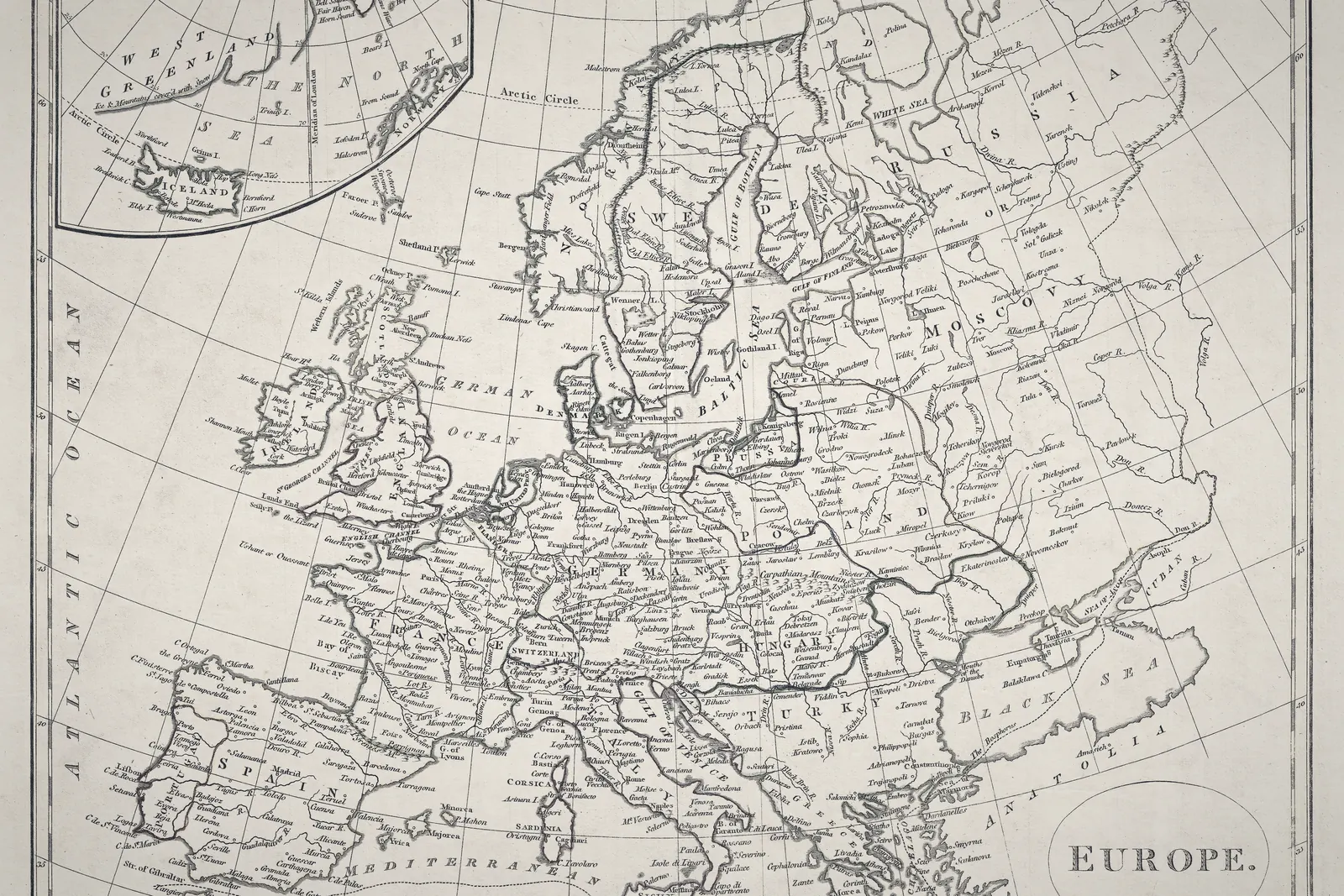
Cities indicate intended reach rather than offices. The association is based in Zug.
Composition
A civic network, not a professional one.
A network confined to a single profession becomes a trade body. Cohorts are built to cut across them.
- Politics
- Law
- Entrepreneurship
- Business
- Technology
- Journalism
- Culture
- Science
- Academia
- Public administration
- Civil society
What the network does
Six forms, each of them ordinary.
None of this is novel. What is unusual is doing it consistently, across borders, for long enough that it compounds.

Chapters
Recurring alumni groups in the cities where fellows live and work, convened locally and connected across the continent.
Salons and reading groups
Small, regular gatherings around a text or a question, continuing the seminar method outside the residential setting.
Lectures, dinners and concerts
Public and semi-public occasions that keep the intellectual and cultural life of the network in view.
Mentorship
Deliberate pairing across generations, borders and professions, extending well beyond the year of a fellowship.
Cross-border projects
Collaborations, research, publications and new organisations founded by fellows who met in a cohort.
Return
Alumni come back as hosts, seminar leaders, mentors, employers, donors and founders. The network is intergenerational or it is nothing.
The long horizon
A fellow formed at thirtyis a host at fifty.
The long horizon
Alumni return as the institution.
The strategic horizon is intergenerational. A fellow formed at thirty is a mentor at forty and a host at fifty, and the Academy that formed them is by then being taught in part by people it produced.
An institution that cannot do this has a founder and a season. An institution that can has a tradition.
- Mentors
- Hosts
- Seminar leaders
- Employers
- Commissioners
- Donors
- Founders
- Writers
- Researchers
- Teachers
- Entrepreneurs
- Public leaders
An institution that cannot renew itself from its own graduates has a founder and a season, not a tradition.